
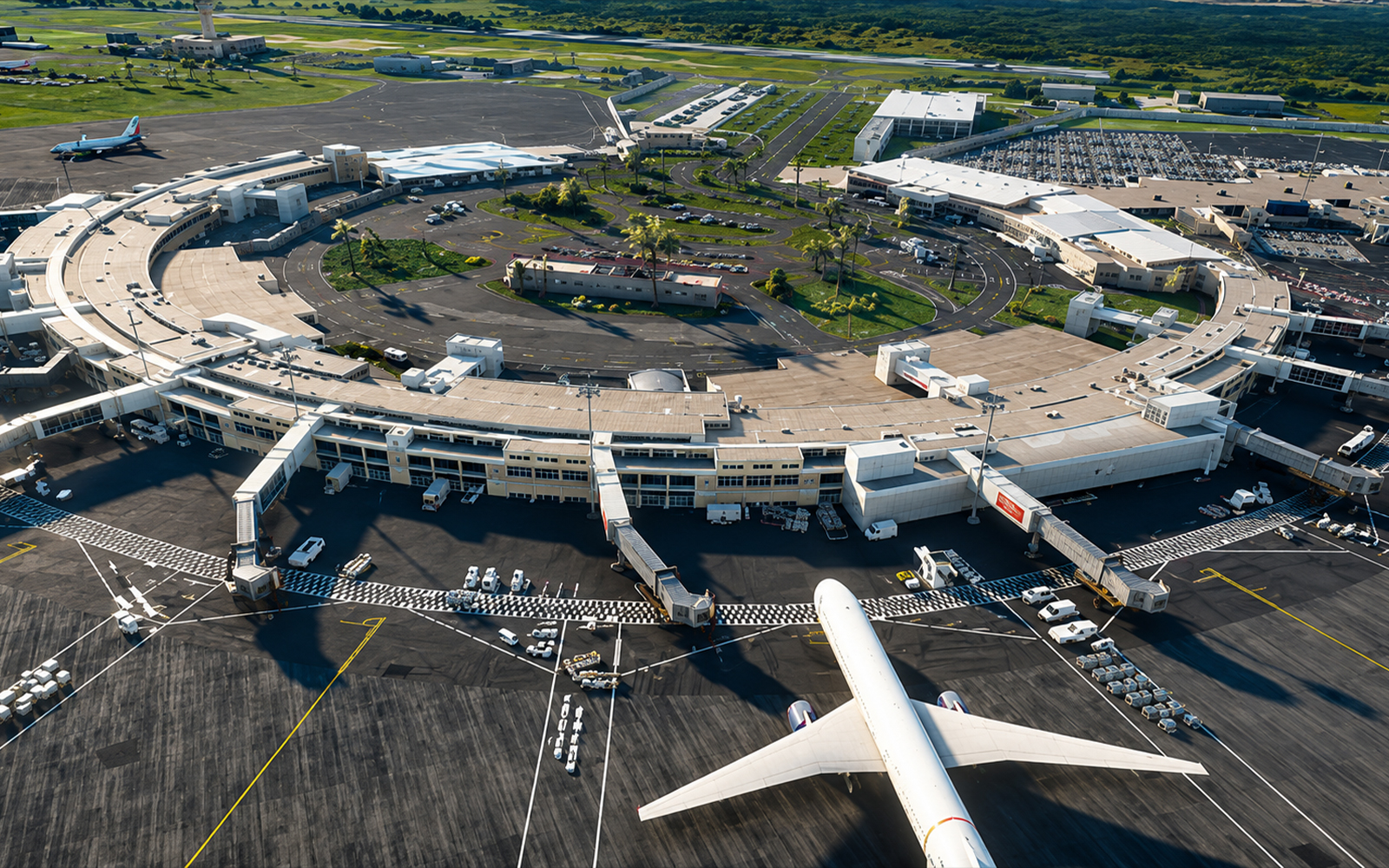
Zimbabwean businessman Wicknell Chivayo has entered the centre of one of East Africa’s biggest infrastructure stories after his company, IMC Construction Kenya, was named as part of a consortium connected to the planned upgrade of Nairobi’s Jomo Kenyatta International Airport.
The project, valued at about $2.9 billion, or roughly KSh375 billion, is one of the most ambitious aviation infrastructure investments currently being pursued in Africa. It is aimed at modernising Kenya’s busiest airport, improving passenger handling, expanding aviation capacity and strengthening Nairobi’s position as a regional gateway for travel, trade, tourism and logistics.
Jomo Kenyatta International Airport is more than a national airport. It is a strategic economic asset for Kenya and a major connection point for East Africa. Any significant upgrade to the airport carries consequences beyond aviation. It affects tourism, cargo movement, foreign investment, regional business travel and the country’s ability to compete with other African hubs such as Addis Ababa, Johannesburg, Kigali and Doha-connected routes through the Gulf.
According to reports, IMC Construction Kenya is part of a consortium that includes China Communications Construction Company and its subsidiary China Road and Bridge Corporation. The involvement of major Chinese infrastructure players is significant because China-backed firms have played a large role in transport, road, railway and port projects across Africa. Their presence suggests the project is being positioned not only as a construction contract, but as a large-scale infrastructure-financing and delivery package.
For Chivayo, the reported involvement marks a major expansion into East African infrastructure. The Zimbabwean businessman has long been a high-profile and controversial figure, known for major public-sector-linked deals and close proximity to political power. His entry into the Kenya airport project has therefore generated attention not only because of the scale of the contract, but because of the public sensitivity around procurement transparency in the region.
That sensitivity is sharpened by the history of the airport upgrade itself. Kenya previously faced public backlash over a proposed airport arrangement involving India’s Adani Group, which was later cancelled. The new process is therefore unfolding under intense scrutiny, with questions likely to focus on financing, procurement transparency, local participation, delivery timelines and the balance between public ownership and private-sector involvement.
The Kenyan government has framed airport expansion as necessary for national competitiveness. Earlier tender information from Kenya’s transport authorities described plans to develop new airport facilities at JKIA and upgrade existing infrastructure, including runway improvements, taxiways, terminal reconfiguration and passenger-flow upgrades. These improvements are designed to ease congestion, reduce operational bottlenecks and prepare the airport for long-term growth.
The economic case is clear. A stronger JKIA could support more efficient cargo movement, improved airline operations, better passenger experience and increased tourism arrivals. For Kenya, whose economy relies heavily on services, regional trade, agriculture exports, business travel and tourism, a modern airport is not a luxury project. It is part of the country’s growth infrastructure.
But the political and governance risks are just as clear. Large airport projects can become flashpoints because they involve public assets, foreign contractors, long-term financing and billions in public or quasi-public commitments. If citizens believe the process is opaque, even a technically necessary upgrade can lose public trust. This is why the consortium’s composition and the role of Chivayo-linked interests are likely to remain under close public and media examination.
For the wider region, the deal reflects a broader race to upgrade infrastructure as African economies compete for investment and connectivity. Airports are becoming symbols of national ambition, but they are also tests of governance. The countries that deliver modern infrastructure transparently and efficiently will strengthen investor confidence. Those that fail to communicate clearly risk turning development projects into political controversies.
The JKIA upgrade now sits at the intersection of ambition and scrutiny. It could transform Kenya’s aviation capacity and strengthen Nairobi’s role as a continental hub. At the same time, the involvement of a politically connected foreign businessman ensures the project will not be judged only by its engineering outcome, but by the transparency and credibility of the process behind it.
For now, the project has moved back into the spotlight. The promise is a world-class airport. The test will be whether Kenya can deliver it in a way that convinces both investors and the public that the country’s most important aviation gateway is being upgraded in the national interest.
Share this article