
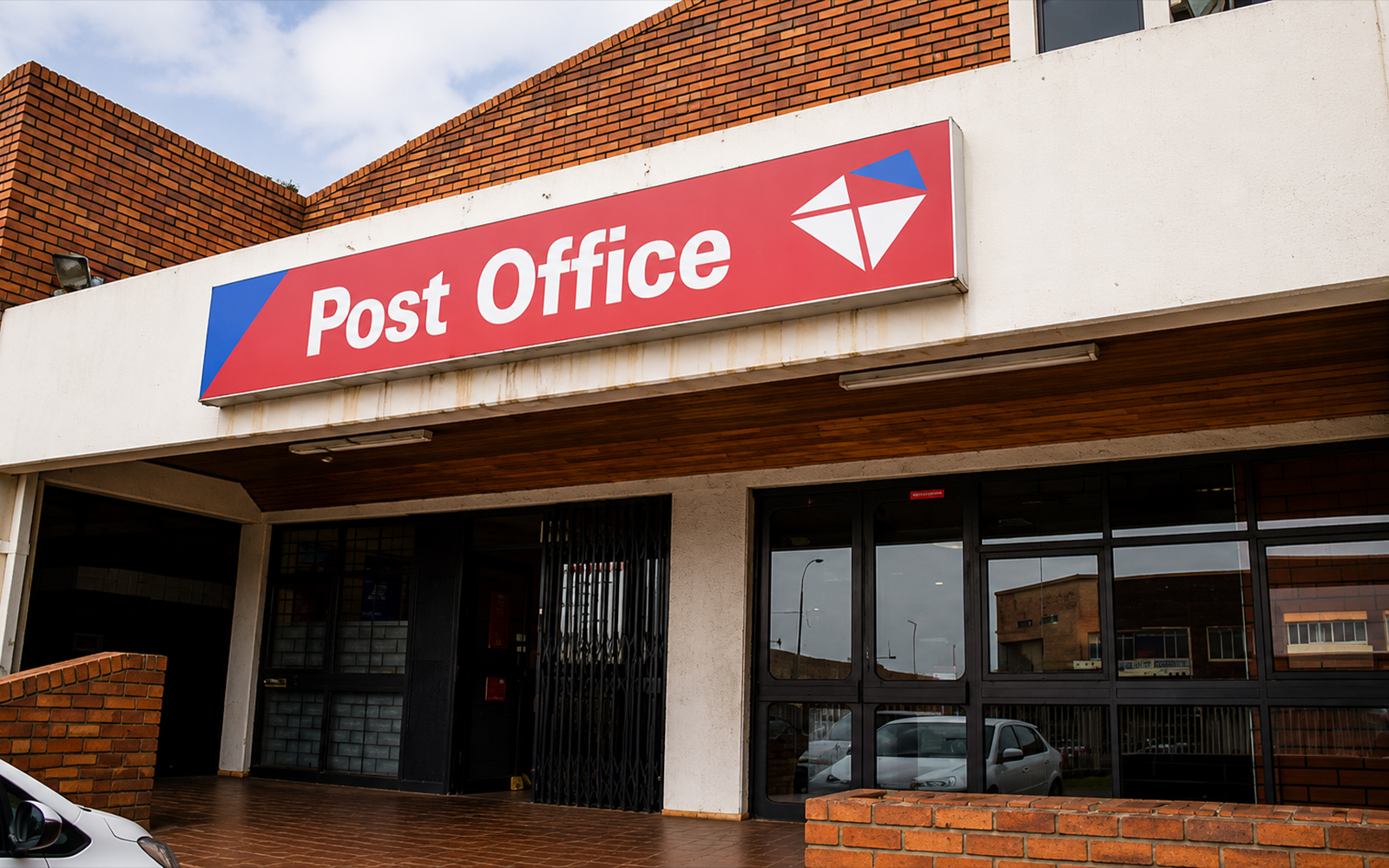
The South African Post Office is preparing to exit business rescue, marking a major turning point for one of the country’s oldest and most troubled state-owned institutions. After years of financial collapse, operational decline, branch closures and job cuts, the entity is now moving toward life after rescue, but the hardest part of its recovery may only be starting.
The business rescue practitioners have launched an application in the High Court in Pretoria to terminate the rescue process, arguing that SAPO is no longer technically insolvent. This is a significant development for an organisation that once appeared to be heading toward liquidation. The Post Office had been placed in business rescue in 2023 after years of losses, debt, shrinking mail volumes, failed modernisation efforts and growing doubts over whether it could remain commercially relevant.
The exit comes despite SAPO not receiving the R3.8 billion bailout that had been viewed as crucial to the original rescue plan. That missing funding makes the moment both hopeful and fragile. On one hand, the Post Office has avoided immediate collapse and has reduced some of the financial pressure that pushed it into rescue. On the other, it will now need to prove that it can operate sustainably without relying on another major taxpayer-funded lifeline.
The restructuring has come at a high human cost. Thousands of employees have already been retrenched, and many branches have been closed or consolidated as part of efforts to reduce costs. These decisions may have helped improve the balance sheet, but they also leave SAPO with a smaller national footprint and a more difficult task: rebuilding public trust while operating with fewer people, fewer locations and limited capital.
For many South Africans, the Post Office has long been more than a mail service. It has served pensioners, rural communities, small businesses, government departments and citizens who depend on accessible public infrastructure. In remote and underserved areas, a functioning Post Office can still play an important role in document delivery, parcel services, identity-related services and access to government-linked communication. The problem is that the world around SAPO has changed faster than the organisation did.
Private couriers, digital communication, online platforms, e-commerce delivery networks and mobile financial services have taken over many of the functions that once gave the Post Office its relevance. Letters have declined, consumers expect faster parcel delivery, and businesses increasingly rely on private logistics providers. SAPO’s future therefore cannot be built on nostalgia. It must be built on a clear service model that fits the modern economy.
That is why exiting business rescue is not the same as being rescued. The court application may close one legal chapter, but it opens a much tougher operational chapter. SAPO will need disciplined management, a credible board, stronger partnerships, better technology and a realistic commercial strategy. It must decide where it can still compete, where it should partner with private operators, and which services should be protected because of their public value rather than their profitability.
The newly approved board will now inherit an institution with both history and heavy expectations. Its task is not simply to keep the Post Office alive, but to redefine why it should exist. A smaller SAPO could still matter if it becomes reliable, digitally connected and strategically focused. It could support e-commerce in underserved areas, provide public-service access points, work with government departments and build selective logistics partnerships. But it cannot afford to return to the same model that failed.
The danger is that the exit from business rescue creates a false sense of recovery. Without strong execution, the Post Office could quickly slide back into crisis. Revenue must stabilise, costs must remain under control, service levels must improve, and customers must be given a reason to return. If those things do not happen, exiting business rescue may only delay another financial emergency.
For now, the development is a rare piece of positive news for SAPO. The organisation has stepped away from the edge of liquidation and is preparing to stand on its own again. But the next phase will determine whether South Africa’s oldest state-owned company can become a leaner, modern public-service platform, or whether it remains trapped between a proud past and an uncertain future.
Share this article